
Can You Use an Old Survey for a New Fence Project?
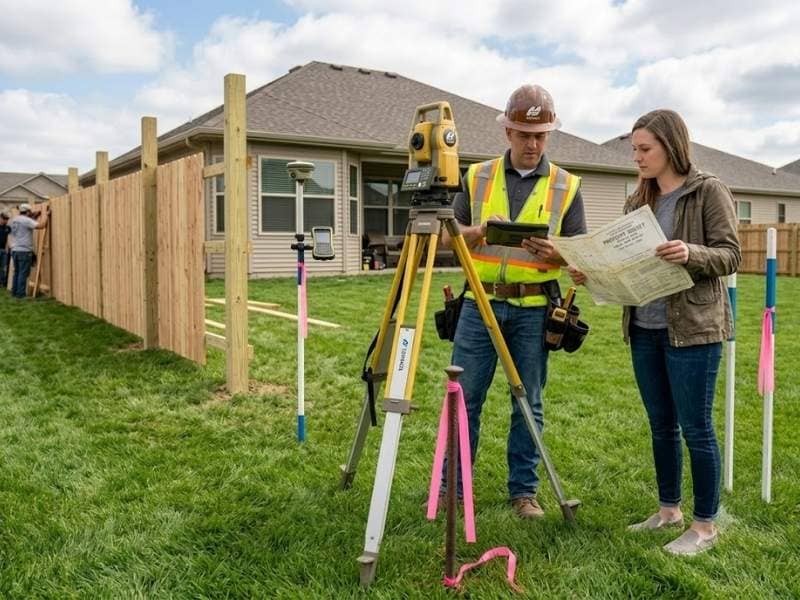
You finally decided to put up a fence and you already have a survey sitting in a drawer somewhere. Before you hand it to your fence crew, it’s worth asking a simple question: is that document still good? Knowing when to trust an old survey and when to call a surveyor for fence work could save you from a costly mistake before the first post goes in the ground.
How Long Is a Property Survey Actually Good For?
There’s no official expiration date on a property survey. But most counties and mortgage lenders treat surveys as reliable for roughly two to five years. After that window, things change, and your old document doesn’t update itself.
A survey from three years ago might still hold up fine. One from fifteen years ago is a different story. The National Society of Professional Surveyors recommends updating boundary surveys any time a significant change occurs near or on a property, including construction projects, road work, or lot splits. That standard applies directly to fence work.
The older the survey, the more chances there have been for something to shift, get recorded differently, or simply disappear from the ground.
Why Survey Data Goes Stale
Think of a survey the way you’d think of a photograph. It captured your property accurately on one specific day. But the land looks different now. A utility company adjusted an easement. A neighboring lot got subdivided. The county updated its plat records. A drainage project regarding the area behind your house.
Each of those changes is small on its own. Together, they can put your old survey off by enough to cause real problems when you’re placing a fence line. The American Land Title Association reports that boundary issues affect roughly one in three residential property transactions, and many of those trace back to outdated or unverified survey information.
Signs Your Old Survey Isn’t Safe to Use
A few things tell you right away that the survey you’re holding isn’t going to cut it.
Start with the date. Anything over five years deserves a second look. Over ten years is a serious concern for fence construction. Next, go outside and try to find the iron pins or rods marked on your survey drawing. If you can’t locate them, you can’t verify the boundary on the ground, and that’s a problem.
Then think about what’s changed nearby since the survey was done. Has a road been widened? Did a new subdivision go in next door? Was there any utility or drainage work in the area? Any of those can affect your recorded line.
Finally, check with your local building department before you assume your old survey qualifies for a permit. Some municipalities won’t accept a survey older than two years for fence permit applications. Finding that out after the fact means starting the process over.
When a Fence Project Forces a New Survey
Replacing an existing fence doesn’t mean you’re automatically in the clear. A lot of old fences were installed without any survey at all. If the previous owner guessed at the line and got it wrong, building a new fence in the same spot just repeats the error.
Shared boundary lines are another situation where an old document isn’t enough. Any fence that runs along the line between your lot and a neighbor’s needs a verified, current boundary. A handshake agreement based on a drawing from ten years ago won’t hold up if there’s a disagreement later.
Permit requirements push many homeowners toward a fresh survey too. If your county requires a survey dated within a specific window and yours falls outside it, the permit gets denied. You’ll need updated paperwork before you can move forward anyway.
What a Fresh Survey Gives You That an Old One Can’t
When a licensed surveyor goes out to your property today, they pull the most recent deeds and plat maps on record. They locate any existing markers, measure against current data, and flag anything that doesn’t line up before you build.
Then they place physical stakes at your corners. That’s what an old survey simply cannot give you, no matter how accurate it was when it was drawn. Your fence crew follows those stakes, not a drawing from a decade ago. A 2022 Urban Land Institute report found that boundary errors discovered after construction cost property owners an average of $4,200 to correct, not counting any legal fees involved.
Old Survey or New Survey: How to Decide
Start with what you have. Check the date and the condition of the document. Then go outside and try to find the markers it references.
If they’re there and they match the drawing, the next step is to call a licensed surveyor and ask them to review the old document. They can assess it in one visit and tell you whether it holds up for fence work. That’s a faster and cheaper step than assuming you’re covered and finding out later that you weren’t.
If the markers are gone, or the survey is old, skip the review and go straight to a new one. The cost of a current survey is almost always less than the cost of fixing a fence built in the wrong spot.
Frequently Asked Questions
How long is a property survey good for?
Most counties and lenders treat surveys as current for two to five years. There’s no universal rule, but age matters when it comes to fence permits and boundary verification. Surveys older than five years usually need professional review before you can rely on them for construction.
Does a survey expire?
Not technically, but surveys become less reliable as conditions and records change over time. A licensed surveyor can review your existing document and tell you whether it still reflects current boundaries or whether a new one is needed.
Will my old survey work for a fence permit?
That depends on your county. Some require a survey dated within the past two years. Others are more flexible. Check with your local building department before submitting anything.
How do I know if my survey is out of date?
Look at the date and go find the physical markers on your property. If the markers are missing or you can’t match them to the drawing, the survey can’t be verified in the field. At that point, a new survey is the safer path.
Can a surveyor review an old survey instead of doing a completely new one
Yes. In some cases, a boundary staking visit is enough. A licensed surveyor can assess your existing document and tell you what’s needed. Sometimes a full re-survey is the only safe option, but that call should come from the surveyor after they’ve looked at what you have.
How do I hire a surveyor for fence work?
Look for a licensed land surveyor in your area and ask specifically about residential boundary surveys and corner staking for fence projects. Get a written quote before work begins and confirm the final product includes physical markers and a signed, sealed survey document you can keep for your records.