
What an As-Built Survey Reveals After Construction Is Complete
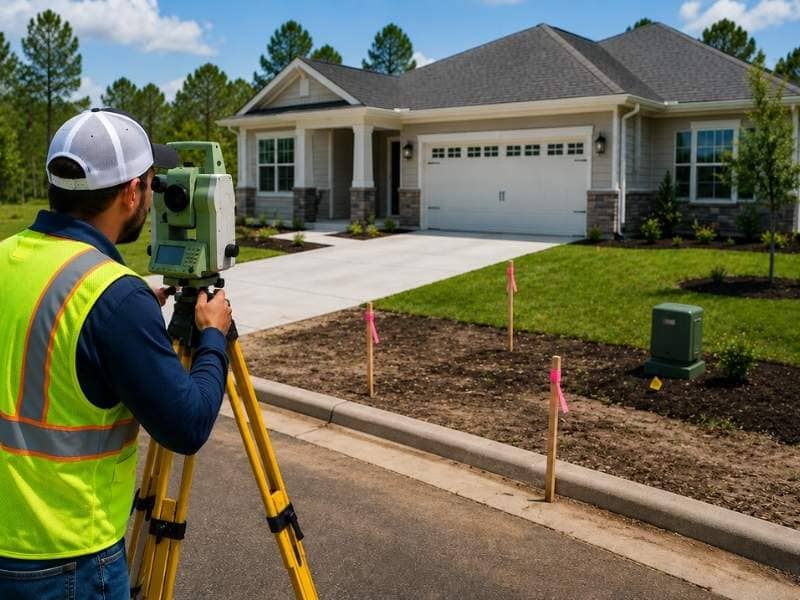
When construction ends, the finished project does not always look exactly like the original plans. Walls shift a few inches. Driveways end up slightly wider. Utility lines get rerouted. An as-built survey captures all of that. It measures what was actually built and records it in a document that shows the final layout of the property. That record becomes useful for future work, permit closures, and property sales.
How As-Built Surveys Show the Final Layout of a Property
An as-built survey is done after construction is finished. A surveyor goes to the site and measures what was built. That includes buildings, driveways, sidewalks, fences, and utility connections, along with anything else added or changed during the project.
Those measurements get recorded in a drawing that shows where everything ended up. The drawing reflects the real finished state of the property, not what the plans said it would look like. That is the key difference between an as-built survey and a construction drawing. One shows the plan. The other shows what actually happened.
Property owners, builders, and local offices all use as-built surveys for different reasons. A homeowner might need one to close out a building permit. A builder might need one to hand off a finished project to a client. A future contractor planning an addition will want to know where the existing plumbing and electrical lines actually run. That is hard to know without a survey.
Why As-Built Surveys Can Find Changes Made During Construction
Construction projects change as they go. A wall gets moved a foot to the left because of a pipe that was not on the original plans. A driveway gets widened because the homeowner changed their mind during the build. A utility trench takes a different path because the original route hit rock underground.
These changes happen on almost every project. They are often small and made quickly to keep the job moving. But they do not always get written down in a way that is easy to find later. The original plans stay on file, but the changes made in the field may not be captured anywhere.
An as-built survey fixes that. The surveyor measures what is there after everything is done. If the finished driveway is two feet wider than the plans showed, the survey records it. If a building sits three inches closer to the property line than the permit allowed, the survey shows that too. Finding those differences early gives the property owner time to address them before they become problems later.
What As-Built Surveys Reveal About the Location of Structures
Knowing where a structure sits on a property matters more than it might seem. A building that ended up too close to a property line could violate setback rules. A fence built during construction might cross into an easement. A patio added at the end of a project might sit closer to a neighbor’s lot than local rules allow.
An as-built survey measures each structure’s distance from the property lines, from other structures, and from any easements on the property. Those measurements show whether everything is where it is supposed to be.
This also matters when a property changes hands. A buyer wants to know that the structures they are purchasing sit within the legal limits of the lot. A title company may require survey documentation before insuring the property. An as-built survey provides that documentation. It shows the exact position of each completed feature on a drawing tied back to the legal property boundary.
Why As-Built Surveys Matter More as Development Continues to Grow
As more homes and buildings get built, the need for accurate records grows with them. Properties sit closer together. Lot lines matter more when neighbors are only a few feet apart. Easements for utilities and drainage cut across more parcels. Small mistakes in placement become harder to fix the more built-up an area gets.
An as-built survey creates a clear, dated record of what was built and where. That record helps resolve questions that come up years after a project is done. If a neighbor disputes a fence location, the as-built survey shows where it was placed at the time of construction. That takes the guesswork out. A future owner planning an addition can check the as-built survey. It shows how much space sits between the building and the lot line.
Property records that include as-built surveys are also more useful to local offices. A permit office or utility company can check the as-built survey to find out what is on a lot. It gives them reliable information to work from.
How Land Surveyors Use As-Built Surveys to Create Lasting Records
A land surveyor performing an as-built survey starts by reviewing the original construction plans and any permits that were pulled for the project. That review gives the surveyor a starting point and a list of features to look for on the ground.
The surveyor then visits the finished site and takes measurements of each completed feature. Buildings get measured from multiple points to confirm their size and position. Driveways and sidewalks get measured for width and location. Utility connections, drainage structures, and any other site improvements get recorded as well.
All of those measurements tie back to the property’s legal boundary. That connection is what makes the survey useful over time. The drawing shows where things are in relation to lot lines, easements, and other legal features of the property. That connection is what makes the survey useful over time.
The finished as-built drawing becomes a permanent record. It can be filed with the local permit office, kept by the property owner, or shared with a title company. Future contractors can use it too. Every time someone needs to know what is on that lot, the as-built survey gives them an accurate starting point.
Frequently Asked Questions
What information do as-built surveys provide after construction is complete?
An as-built survey records the final location of buildings, driveways, sidewalks, utility connections, and other features that were added or changed during construction. It shows what was actually built on the property, not just what the original plans called for.
Why are as-built surveys important when a project is finished?
They confirm that completed features sit within the correct distances from property lines, easements, and other structures. They also create a dated record that helps future owners, contractors, and permit offices understand what is on the lot.
Can as-built surveys show changes that happened during construction?
Yes. The survey measures what is on the ground after work is done. That means any changes made during the build will show up in the drawing. A wall moved during framing, a wider driveway, or a rerouted utility line will all show up in the as-built drawing.
Why are as-built surveys becoming more important as development grows?
As more properties get developed and lots sit closer together, accurate records of what was built and where become more valuable. An as-built survey creates a clear record that helps resolve future questions about structure placement, property lines, and easements.
How do land surveyors perform as-built surveys?
The surveyor reviews the original plans, then visits the finished site and measures each completed feature. Those measurements tie back to the legal property boundary. They get recorded in a drawing that shows the final layout of the property.