
5 Reasons Builders Request Construction Staking Before Excavation Begins
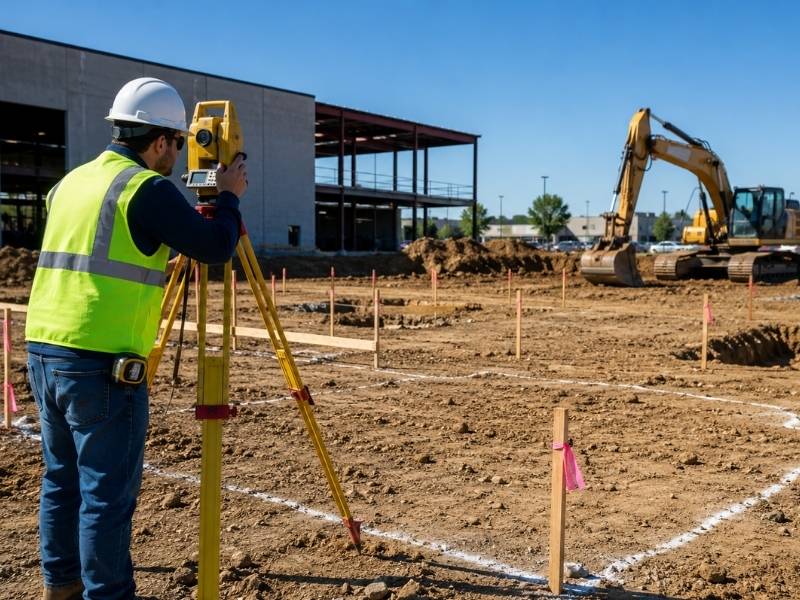
Construction staking marks where every part of your project goes before a single shovel hits the dirt. Get it wrong and crews dig in the wrong spot. That one mistake can cost weeks and thousands of dollars. Builders order staking early for a simple reason. It turns the plan on paper into clear marks on the ground, so the right thing gets built in the right place the first time.
Here are the five biggest reasons developers ask for it before excavation.
Staking, boiled down to one idea
Construction staking is when a licensed surveyor places stakes and marks across your site. Each stake ties to a point on the approved plans. The marks show crews where to dig, where walls go, and how deep to build. Some people call it site layout or construction layout. It happens after the plans are approved and before the machines show up.
1. The paper says one thing, the dirt says another
Plans look clear on paper. Dirt is not paper. A slope, a tree line, or a fence can throw off where a crew thinks a wall should sit. Staking removes the guessing.
The surveyor marks the exact corners, edges, and centerlines from your design. Crews see paint, stakes, and flags instead of a printed sheet. That means:
- Foundation corners land where the plan says
- Roads and pads follow the right path
- Operators dig with a clear target, not a rough idea
A crew that can see the layout works faster and cleaner. Fewer questions reach the office. Fewer holes get dug twice.
2. One foot over the line changes everything
Digging past a property line or a setback is a costly error. You may have to tear out work, pay fines, or fight a neighbor in court. Staking helps you avoid all of it.
The surveyor sets stakes that show your lines and required setbacks. Crews stay inside them. This matters most on tight lots where every foot counts. A structure that sits even a little too close to a line can fail inspection or trigger a legal claim later.
Catching this before you dig is cheap. Fixing it after concrete is poured is not.
3. Right spot, wrong height, still a mess
A wall in the right spot at the wrong height still causes problems. Staking marks how deep to cut and how high to fill at each point on the site.
Those marks come straight from the plan. They guide:
- Foundation depth
- Pad and slab heights
- Slopes that carry water away from the building
Grades control drainage. If the site sits too low or slopes the wrong way, rain pools near the foundation. In a wet climate with heavy summer storms, that leads to flooding, cracks, and mold. Staking gives crews the target numbers so water runs where it should from day one.
4. Where you can’t dig matters just as much
Staking shows more than where to build. It shows where you cannot. Surveyors mark easements and planned utility routes so crews keep clear of them.
This is the moment small conflicts show up. A stake might reveal that a planned trench runs into an easement. Or that a foundation edge sits over a line that has to stay open. Finding that now means you adjust a drawing. Finding it mid-dig means you stop work, call the engineer, and wait.
Staking does not replace an 811 utility locate. You still call before you dig. But the two together give crews a full picture of what to avoid.
5. Digging twice costs double
All four points above lead to the same payoff. Staking saves money.
Rework is one of the biggest budget killers on a job. Every hole in the wrong place means paying twice. Every failed inspection means paying an engineer to fix it and a crew to wait. Staking front-loads the accuracy so those problems never start.
The cost of staking is small next to one bad dig. Most builders treat it as basic insurance. You pay a little now to skip a big bill later.
Timing: call the surveyor at the right moment
Staking comes after your plans are approved and before excavation starts. Order it once the design is final. If the plan changes, tell your surveyor so they can update the stakes. Stale marks from an old version cause the same errors you were trying to avoid.
On bigger projects, staking happens in stages. Rough staking guides the first cut. Later rounds mark curbs, footings, and finish grades as the build moves along.
What it all adds up to
Construction staking is the bridge between the design and the dirt. It keeps crews inside your lines, at the right depth, and clear of what they should not touch. Skip it and you gamble with your schedule and your budget. Order it and you give your crew a clear map to follow.
Frequently Asked Questions
How much does construction staking cost?
Construction staking costs vary based on the size of the site, terrain, project complexity, and the number of layout points that need to be marked. Larger commercial developments generally require more staking than small residential projects.
Is construction staking the same as a topographic survey?
No. A topographic survey documents existing ground elevations and site features, while construction staking transfers the approved design onto the property by marking the exact locations where improvements will be built.
Can construction staking be performed without a licensed surveyor?
Construction staking should be completed by a licensed land surveyor to ensure the layout accurately follows the approved plans and established property boundaries. Accurate staking helps reduce costly construction errors.
What happens if construction stakes are disturbed?
Construction stakes can be moved or removed during site work. If this happens, the surveyor should return to verify and replace the missing or damaged stakes before construction continues in that area.
How long does construction staking take?
The timeline depends on the project’s size and complexity. Smaller projects may be completed within a day, while larger developments often require multiple staking visits as different phases of construction progress.