
When a Construction Surveyor Checks a Multi-Phase Building Layout
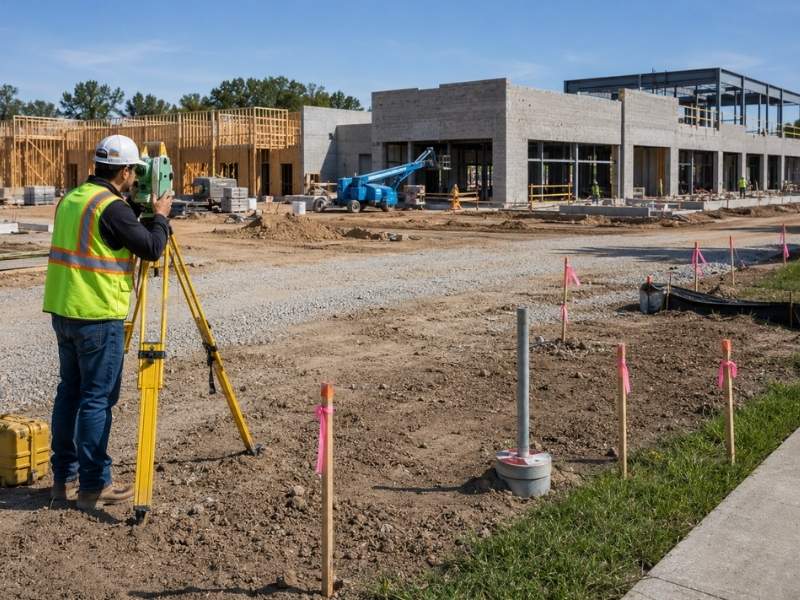
A construction surveyor keeps a commercial development lined up as it rises in stages, often built months or even years apart. When different contractors and schedules meet over time, small layout errors can pull whole buildings out of place. A crooked wall or a shifted foundation may not show up until the next phase begins. Steady field control is what holds every phase to the same plan, which is why the surveyor’s checks matter from the very first stake to the last.
How a Construction Surveyor Sets Control Points Before Phase One
A construction surveyor starts by placing permanent control points before any building goes up. These are fixed marks with known positions that anchor the entire site. Crews measure from them to set foundations, walls, and utilities, so the accuracy of these points carries into every later step. If the control is off at the start, that error spreads through the whole project.
Placing these marks well early pays off for the entire build. The surveyors put them where construction traffic will not destroy them and where crews can still reach them in future phases. A strong network of control at the start means far less guessing when work restarts later. Good placement now saves hours of searching and re-measuring down the road.
Keeping Layout Accurate When Phases Are Months Apart
Long gaps between phases are where layout tends to drift. A control point can get buried, bumped, or paved over while a site sits quiet. Weather, heavy equipment, and stored materials can all disturb a mark that once held a perfect position. Before a new phase begins, the surveyor confirms that the marks still hold their true positions and checks the benchmarks used for elevation.
This step protects the work that already stands. The crew re-measures between known points and hunts for any mark that has moved. If a point has shifted, the surveyor resets it against the ones that still hold true. Confirming the old control before adding new work ties the next building to the same framework as the first, even after a long pause.
Adjusting Field Staking When Site Conditions Change
A surveyor updates the staking whenever the site shifts from the original plan. Grading gets adjusted, a utility line moves, a design gets revised, or a contractor changes the order of work. Each of these changes can call for fresh stakes while the overall project still has to line up. The plan on paper rarely survives contact with the field untouched.
The trick is fixing one area without upsetting the rest. New stakes reflect the change, yet they still tie back to the same control that governs the whole site. That way a single revision stays contained instead of throwing off the buildings around it. The surveyor treats each change as part of the larger picture, not a problem to solve on its own.
Checking Spacing and Setbacks Between Multiple Buildings
On a site with several buildings, the surveyor verifies the spaces between them, not just each footprint. That means spacing, offsets, and setbacks, plus the access routes, parking, and connections that tie the structures together. A foundation can be perfect on its own and still sit wrong next to its neighbor. The relationships between buildings matter as much as the buildings themselves.
Checking these relationships keeps the whole layout working as one site. Fire lanes stay clear, parking meets the entrances, and utility runs connect where they should. Local codes often set strict rules for these distances, so the surveyor confirms the site meets them. This wider view separates careful phased work from a set of buildings that do not quite fit.
Giving Crews Reliable Layout Data at Every Phase
The surveyor’s work keeps feeding the project long after the first walls rise. Verified control and completed layouts give crews dependable reference points for paving, utilities, and site features as each phase moves ahead. Later phases lean on that data to start clean. Without it, every new crew would be guessing about where the last one left off.
Reliable information cuts the rework that often drains phased projects. When paving crews and utility installers build from the same confirmed points, their work matches the earlier phases. Fewer mistakes mean fewer delays and lower costs for everyone on the site. That steady thread of accurate layout lets a project grow in stages and still come together as a whole.