
Setting Pedestrian Bridge Foundations With Construction Staking
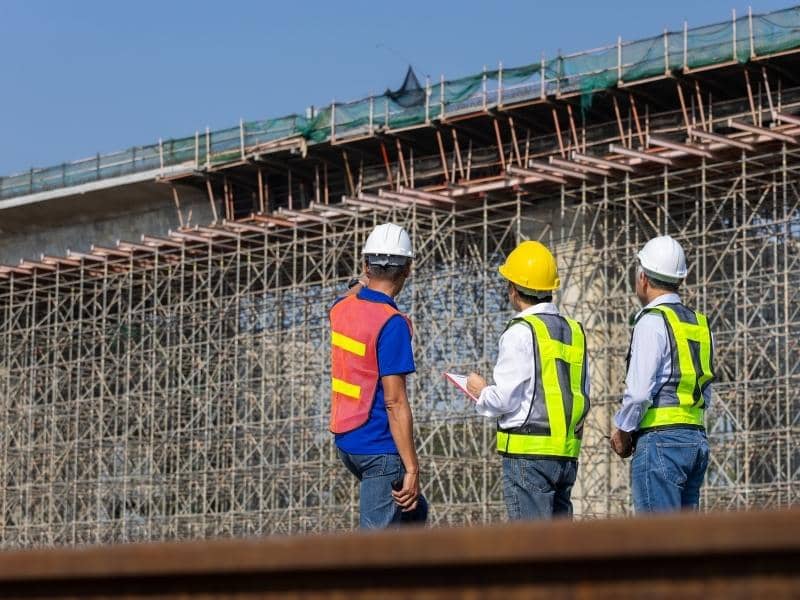
A pedestrian bridge has very little room for error at its foundations. The span is often built off-site to fit between two supports, and it has to land on bearings set at exact positions and heights. If a pile or footing is off by a few inches, the span may not seat properly when it arrives.
A construction staking survey helps prevent that problem. . It takes the locations and elevations from the bridge plans and marks them on the ground before and during foundation work. For contractors, engineers, and project owners, careful staking is one of the cheapest ways to protect an expensive structure.
Preparing Survey Control for Pedestrian Bridge Foundations
Every stake on a bridge job should trace back to the same survey control. Survey control is a set of fixed points with known coordinates and elevations. The surveyor sets them around the site and uses them to locate every pile, footing, and bearing.
Bridge sites add a twist because the control has to span a gap. The crossing may run over a creek, canal, wetland, or roadway, so both ends need points tied into one network. An abutment is the support at each end of the bridge, and if each side is staked from separate control, the two abutments can end up out of line with each other.
Place control where construction won’t disturb it. Keep points clear of pile-driving equipment, crane pads, and excavation, and set extras on each side so a crew can always check into at least two. Confirm the control against the project’s coordinate system and vertical datum before staking starts. A vertical datum is the reference used to measure heights.
Translating Bridge Plans Into Precise Foundation Locations
The bridge plans show where each foundation element goes, but those locations still have to become field points. The surveyor pulls coordinates for pile centers, footing corners, pier center lines, and bearing points from the design files. Those points become the staking layout.
Check the plans before any points are computed. The bridge drawings, civil site plans, and structural sheets should agree on the bridge center line, stationing, and elevations. Stationing is a system of distances measured along the bridge or path alignment. Conflicts between sheets are common, and they’re far easier to fix on paper than in the field.
Ask for the current revision of every sheet the surveyor will use. Send the engineer’s written answers to any open questions along with the files. A short plan-review meeting between the engineer, contractor, and surveyor can clear up most issues before the crew mobilizes.
Setting Foundation Piles, Footings, and Structural Points
Foundation staking usually happens in steps that follow the construction order. The crew marks excavation or work limits first. Then they stake pile or drilled shaft locations, footing corners, and center lines.
Piles and drilled shafts need special care. Piles are long columns driven or drilled into the ground to carry the bridge load, and they can drift as they go in. The surveyor sets each location along with offset stakes, which sit a known distance away so the crew can check position after the center point disappears.
After the piles or shafts are in, the surveyor can measure their actual positions. The engineer compares those locations with the plans before pile caps or footings are formed. Later staking covers form lines, anchor bolts, and bearing seats, which are the pads the bridge span will rest on.
Verifying Elevations and Alignment During Construction
Checks during construction matter as much as the first layout. Forms can shift, rebar cages can move, and pile cutoff heights can drift. The surveyor should verify key points at each stage before concrete is placed.
Elevations get close attention. The height of each footing, pile cap, and bearing seat controls how the span sits and how the walkway meets the approach path at each end. A difference in elevation at one abutment can affect how the bridge meets the approach path and may create an unintended step or slope change.
Alignment checks confirm that both ends and any middle piers still line up on the bridge center line. Anchor bolt patterns are a common check point, since the span’s bearings must match them exactly. Allowed tolerances come from the plans and project specifications, so the survey team should know them before checking anything.
Reducing Foundation Layout Errors With Construction Staking
Most foundation layout errors come from a short list of causes. A disciplined staking process can reduce the risk of many of these problems. Common causes include:
- Using an outdated plan revision
- Staking from disturbed or mismatched control points
- Losing stakes during excavation or pile work
- Skipping checks between layout and concrete placement
- Poor communication about field changes
Keep a clear record of every staking request, check, and as-built measurement. That record helps the engineer approve each stage and gives the owner documentation for final acceptance. Requirements for as-built data can vary by agency, owner, and project scope, so confirm them before work starts.
Schedule the surveyor early. Bridge foundation work often runs on a tight sequence tied to crane dates, span delivery, and permit conditions. A staking delay at the foundations can hold up the entire job.
A pedestrian bridge depends on foundations placed exactly where the design says they belong. A construction staking survey builds that accuracy in, from the first control point to the last bearing check. If you have a pedestrian bridge project on the schedule, bring in a licensed surveyor early so the staking plan fits both the design and the construction sequence.
Frequently Asked Questions
What is a construction staking survey?
A construction staking survey marks design locations and elevations on the ground so crews can build to plan. Surveyors set stakes, nails, or marks for items like piles, footings, and center lines. The points come from the project’s design files and survey control. It’s used on everything from homes to bridges.
When should a surveyor get involved in a pedestrian bridge project?
Ideally during design, when the existing site is mapped and control is set. At a minimum, bring the surveyor in before foundation work is scheduled. Early involvement gives time to review plans and set control on both sides of the crossing. Late starts often lead to rushed staking and delays.
How accurate does bridge foundation staking need to be?
Accuracy depends on the design and the project specifications. Bridge foundations usually need tighter tolerances than site work like grading or paving. The engineer sets those limits in the plans or specs. The surveyor should confirm them before any staking begins.